 HaoChi 好吃
Shaoxing Wine: What to Buy, and Whether Cooking Wine Is a Scam
2026-08-26
Shaoxing wine is the bottle most Chinese home cooks reach for without thinking, and the one most Western shoppers buy wrong. The problem isn't quality — it's that two very different products sit side by side on the shelf, and the cheaper one isn't always the wrong choice.
What it does in a dish
Shaoxing wine isn't there for flavor in the way soy sauce is. It removes the raw, gamey edge from meat and fish, and it carries aroma — the smell that hits you when it hits a hot wok. That's the whole job.
Reading the label
- Shaoxing cooking wine (料酒): salted, cheap, sold in most supermarkets. Salted to avoid liquor tax, which is why it can't be drunk — but it seasons the dish at the same time
- Drinking-grade Shaoxing (花雕 / 加饭): unsalted, in liquor stores or Asian groceries. Better aroma, and you can drink it
- Avoid anything labeled "rice wine" that's actually mirin — that's sweetened Japanese cooking wine and behaves differently
Which should you buy
If you cook Chinese food once or twice a month, salted cooking wine is genuinely fine — just remember it's salty, so ease off the soy sauce. If you cook it weekly, buy a bottle of huadiao. The aroma difference is real, especially in braises and steamed fish.
Substitutions
Storage
Cooking wine is salted and keeps for a year or more in the cupboard. Drinking-grade huadiao is wine: once opened it slowly oxidizes, so it's better in the fridge and best used within a few months.
Recipes where it matters most
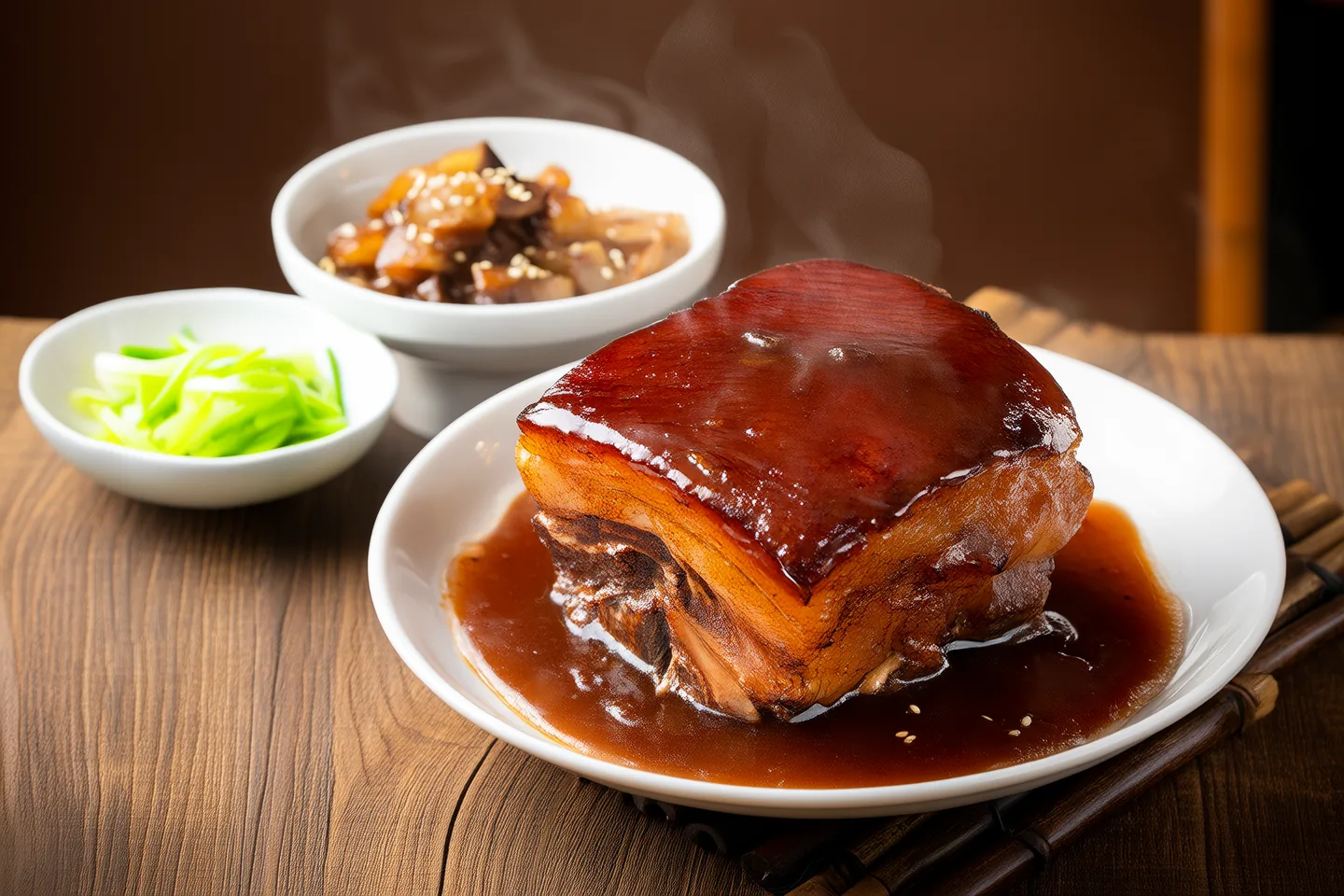
In a red-braised pork, the wine simmers in the braising liquid for a long time, so its aroma concentrates instead of flashing off — this is where huadiao earns its price.
A master-stock braised beef matters even more in the long run, because the wine goes into a stock you strain and reuse — a harsh bottle keeps reappearing in every batch you make from it.
Frequently Asked Questions
Is salted Shaoxing cooking wine bad?
No. It's salted to avoid liquor tax, not because it's low quality. It works fine — just reduce the soy sauce slightly to account for the salt.
Can I use dry sherry instead?
Yes, it's the closest common substitute and behaves almost identically in cooking. Japanese mirin is too sweet to swap in directly.
Does the alcohol cook off?
Mostly, but not entirely — a small percentage remains even after simmering. If you need to avoid alcohol completely, use stock or water with a splash of vinegar.
Is liaojiu (cooking wine) the same as Shaoxing wine?
Not exactly. Shaoxing wine is a specific rice wine from Shaoxing in Zhejiang; liaojiu (料酒) just means 'cooking wine' and is the broader category. Most liaojiu is salted Shaoxing-style wine, sometimes blended with spices like star anise or ginger. When a recipe calls for Shaoxing wine, a plain salted liaojiu does the same job.
Where can I buy Shaoxing wine?
Asian grocery stores are the most reliable source — look in the cooking-wine aisle for salted liaojiu and near the spirits for drinking-grade huadiao. It's also widely available online. For drinking-grade huadiao specifically, try Chinese liquor stores or well-stocked wine shops; regular Western supermarkets usually only carry the salted cooking version.
How long does Shaoxing wine last after opening?
Salted cooking wine keeps for a year or more in the cupboard after opening — the salt preserves it. Drinking-grade huadiao behaves like wine: once opened it slowly oxidizes, so keep it in the fridge and aim to finish it within a few months. Neither spoils dangerously fast; the drinking grade just loses aroma over time.
What's the best substitute if I can't find Shaoxing wine at all?
Dry sherry is the closest common substitute and behaves almost identically in cooking. Don't reach for mirin — it's sweetened and will throw off the dish's balance. If you need to avoid alcohol entirely, use chicken stock with a few drops of rice vinegar for the liquid and a little acidity.