 HaoChi 好吃
National Day Family Feast: 12 Dishes to Feed a Crowd
2026-08-29
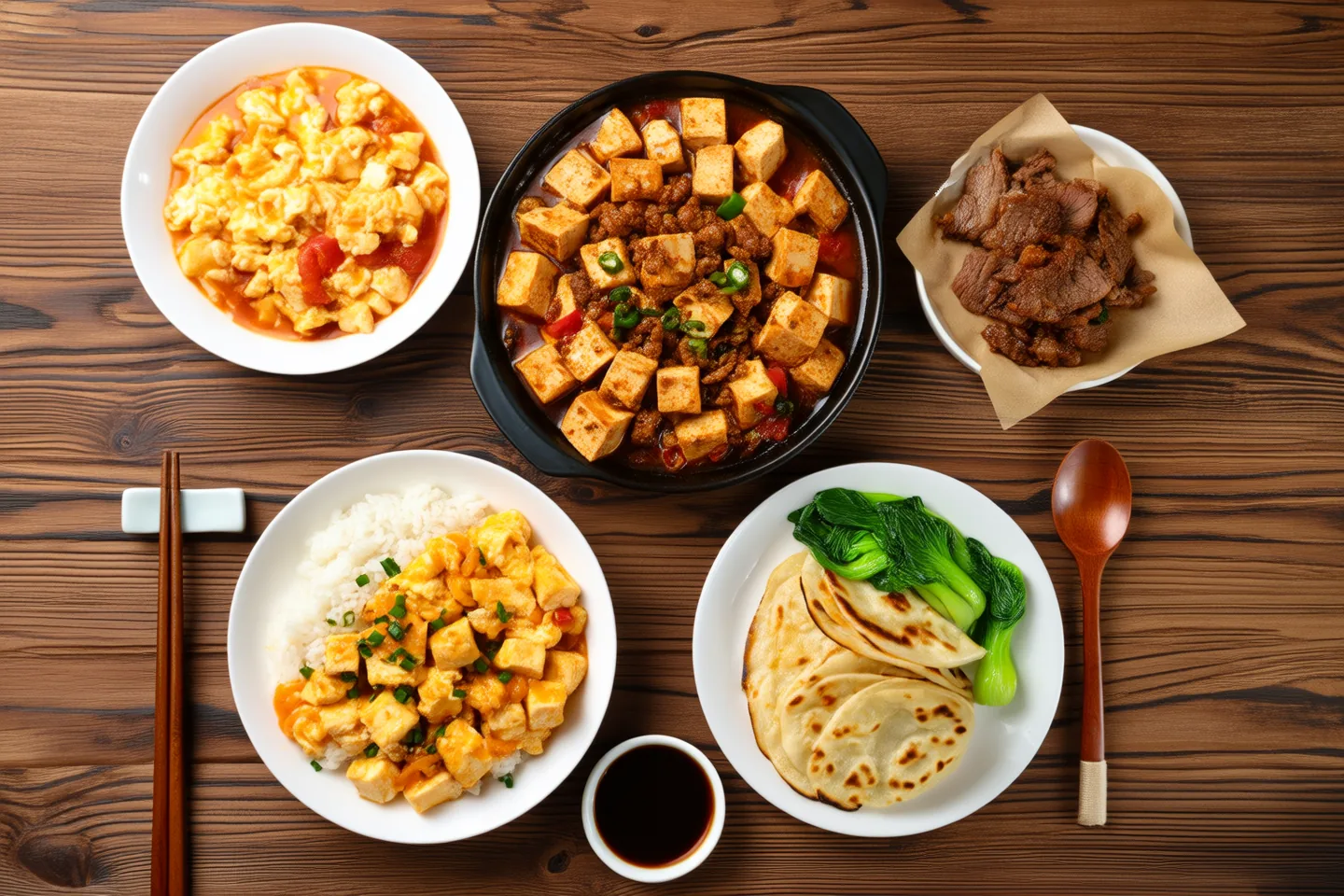
The National Day week is the longest stretch of family time of the year, which means the kitchen becomes Grand Central. The trick is to build a menu where most of the heavy lifting happens the day before, so you are hosting instead of cooking on the day.
Make-ahead braises (cook once, eat all week)
Red-cooked pork (红烧肉) and sweet-and-sour ribs (糖醋排骨) are better on day two. Braise them ahead, refrigerate, and reheat gently — the fat sets, the flavor deepens, and you free up the stove.
- Hong shao pork: cube, blanch, then low braise in soy, wine and rock sugar
- Sweet-and-sour ribs: double-fry for crunch, glaze at the end
- Both improve after a night in the fridge
The lucky centerpiece: a whole steamed fish
A whole steamed fish (清蒸鱼) is non-negotiable for a holiday table — the word for fish (鱼) sounds like surplus (余). Steam it fresh on the day; it takes 8–10 minutes and looks impressive with a hot-oil pour-over.
Finger food that disappears
Char siu (叉烧) and kung pao chicken (宫保鸡丁) are the dishes that vanish first at a gathering. Make the char siu the day before and slice it cold; kung pao comes together in one wok right before eating.
Close the loop
End with something cold and light: a chilled pomelo sago or a plate of white-boiled shrimp. After a week of braises, the table wants a reset.
Prep timeline
The whole menu hinges on front-loading: everything except the fish and the kung pao can be cooked before the day itself. Work in this order and the stove stays free for the two dishes that must be made fresh.
| When | What to do |
|---|---|
| 2 days ahead | Braise the red-cooked pork and the sweet-and-sour ribs, then cool and refrigerate. Both taste better on day two, and the set fat makes reheating tidier. |
| 1 day ahead | Roast the char siu and refrigerate it whole — it slices cleanest when cold. Make the chilled dessert now so it has all night to set. |
| On the morning | Buy the fish and have it cleaned and ready for the steamer. Prep every kung pao ingredient (dice the chicken, mix the sauce) so the final stir-fry takes minutes. Take the braises out of the fridge to lose their chill. |
| Just before serving | Reheat the braises gently. Steam the fish for 8–10 minutes. Stir-fry the kung pao chicken last and send it straight to the table; slice the char siu and serve it cold. |
Only two dishes compete for the stove at the end: steam the fish first, then fire the wok for the kung pao, and do the hot-oil pour-over on the fish right before it goes to the table.
Frequently Asked Questions
How many people does a 12-dish Chinese family feast feed?
With plenty of rice, a 12-dish menu feeds 10 to 12 people. Chinese family feasts are planned at roughly one dish per person, and the mix here — two braises, a whole fish, two crowd-pleasing meat dishes and cold plates — covers that comfortably. For a smaller group, halve the number of dishes rather than shrinking each portion.
Can I halve this menu for a smaller gathering?
Yes. Keep the whole steamed fish — it is the centerpiece and carries the lucky symbolism — then drop duplicate categories: one braise instead of two, one finger food instead of two. Six dishes with rice comfortably feeds 5 to 6 people, and the prep timeline stays exactly the same.
How do I adapt this menu for vegetarian guests?
Swap the meat braises for braised tofu or mushroom dishes — soy-braised tofu puffs and braised shiitake mushrooms keep and reheat just as well, so the make-ahead plan is unchanged. Keep the steamed fish for pescatarians; for a fully vegetarian table, replace it with a festive vegetable platter as the centerpiece.